

South-East Asia
Visit to Vietnam: North to South route
From the mountainous north to the southern cities, Vietnam is more visited by large areas than by a list of stages. Distances, contrasting weather and internal connections call for a coherent course.
Illustration generated by IA · Origin of visuals
Factual references
Vietnam in practice
These benchmarks are used to identify the destination, read a motto and prepare contacts. They do not describe the entry conditions or the current security.
- Capital / institutional headquarters
- Hanoi
- Currency: code to be identified
- VND · dong
- Telephone code
- +84
- Geographical code
- VN
The borders listed below correspond to the neighbours in the Azatour catalogue; they do not constitute an exhaustive list of all neighbouring countries.
Codes and monetary names: SIX, maintenance agency ISO 4217. Comparison of the benchmark made on October 6, 2026; the conditions of payment are verified with the provider.
Source: GeoNames, CountryInfo, import of , CC BY 4.0 license. The specific institutional seats are specified; no demographic data or exchange rates are included.
Destinations with a common land border
To consider a circuit, check separately the opening of borders, permits and transport. A common border does not guarantee an accessible crossing.
A step to understand and organize
Hoi An : distinguish walking and ticket spaces
Hoi An preserves the landscape of an ancient merchant port in Southeast Asia. Its streets and buildings make visible several cultural influences.
Source of the benchmark: UNESCO World Heritage Record. UNESCO DataHub Reference . This source documents the subject; access, tickets and transport must be confirmed separately.
The decision that changes this stage
Compare a walk in the streets with a visit to houses, places of worship or other buildings. Confirm the spaces included in the proposed formulas. If you are staying outside the old town or near a beach, count separately the journeys and the last return.
Three points to confirm before booking
- Interior spaces retained
- Proposed ticket rules
- Travel to the accommodation at the end of the visit
Why go?
Experiences to be missed
Use these markers to compose a program adapted to your pace. Travel times, season and accommodation location count as much as the number of places visited.
Hanoi and the North
Hanoi rewards stays for several nights. The rice fields and reliefs of the North then require slower transfers and a suitable weather.
The historic centre
Huê, Hoi An and the Da Nang region bring another rhythm: heritage, cuisine and coastline are easily combined with a well-chosen base.
Ho Chi Minh City and the South
The metropolis and the Mekong Delta are a living end of the journey. Allow realistic travel times for excursions.
Route idea
A route to be adapted, not to be followed
This frame helps to visualize the pace of the journey. Keep margin for transfers, weather and unexpected discoveries.
- Days 1–5
Hanoi and a Nordic escape
Settle in Hanoi and add a single natural area or cruise, taking into account the season.
- Days 6–9
The centre by plane
Join the centre on an indoor flight and stay at the same base for several nights to discover historic cities.
- Days 10–14
The South without increasing transfers
Finish in Ho Chi Minh City and choose a targeted excursion to the delta or the coast.
Deepening a Step
Heritage and places to understand
Prepare a visit with quirky historical and geographical landmarks, credited photographs and site-specific checkpoints.
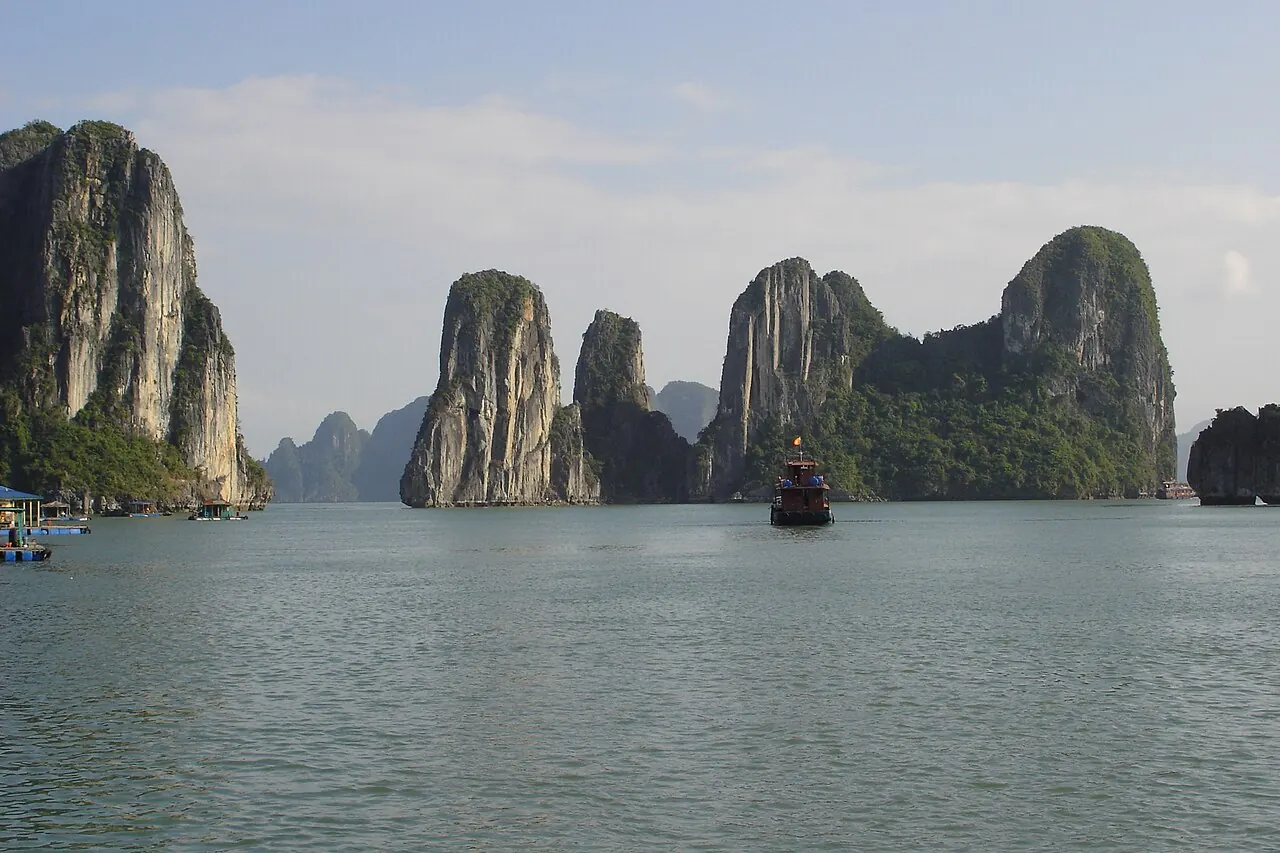
Nature · Northeast Vietnam
Bay d
The Bay of Ha Long and the Cat Ba archipelago form a marine landscape of limestone reliefs. To choose a tour, compare the actual area travelled, transfers, duration on board and weather conditions.
Understanding and preparing the tour →Photo: Ondřej Žváček · CC BY 2.5When to leave
Choose the right time
There is not a single ideal season: the best time depends on the areas visited, your activities and your tolerance to the influx or weather variations.
North
Temperatures, mist and rain vary greatly depending on the month and altitude: check the precise area before setting the steps.
Centre
The rainy season does not follow exactly that of the North or the South. Compare dates with the activities and beaches.
South
Heat and humidity are present for a large part of the year; showers can modify the programs without necessarily preventing travel.
Before booking
Checks that avoid bad surprises
- Check entry conditions, authorized duration and any procedures from official sources before booking.
- Avoid tight internal connections and keep one night of margin before the international flight back.
- Traffic is dense: prefer drivers, organized transport or recognized providers rather than improvised driving.
- Travel with the necessary documents for any medical treatment and take out insurance covering care and repatriation.
The formalities and recommendations may change. Check them before departure and check local information to prepare visits.
Travel Reports — France DiplomacyFrequently Asked Questions
Vietnam: Questions Before Departure · Global Voices
How many days do you plan in Vietnam?
Two weeks allow to connect two or three regions without overloading the program. Ten days invite you to focus on the North and the Centre, or the Centre and the South.
What is the best season for Vietnam?
There is no single answer: the climate of the North, the Centre and the South differs. Leave priority areas and compare their terms and conditions on your dates.
Should we take domestic flights?
They save time between the major regions. Reserve time for a margin and avoid matching them with a short international correspondence.
How can I travel more serenely to Vietnam?
Limit the steps, anticipate transfers and select identifiable providers. Travel days are often longer than a map suggests.
Pursue as you please
Travel ideas around Vietnam
These files compare several destinations according to the type of stay. They help to put this guide back in a wider choice.