
Europe · Alps
Travel to Switzerland: trains, lakes and mountains
Switzerland combines compact cities, lakes and the Alps with a dense railway network. The journey is built around a few bases and a full budget including transport and lifts.
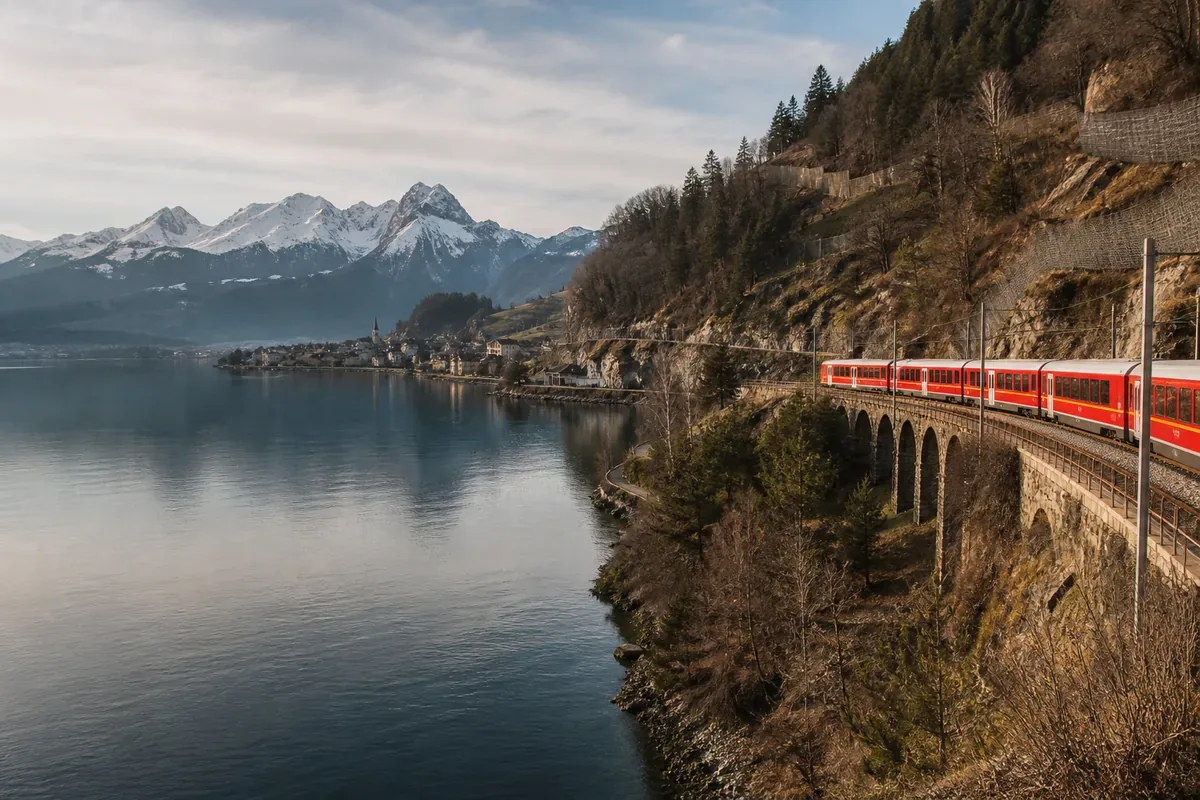
Visual illustration — scenes do not document the current conditions of the place.
Factual references
Switzerland in practice
These benchmarks are used to identify the destination, read a motto and prepare contacts. They do not describe the entry conditions or the current security.
- Capital / institutional headquarters
- Bern (Federal City)
- Currency: code to be identified
- CHF · franc suisse
- Telephone code
- +41
- Geographical code
- CH
The borders listed below correspond to the neighbours in the Azatour catalogue; they do not constitute an exhaustive list of all neighbouring countries.
Codes and monetary names: SIX, maintenance agency ISO 4217. Comparison of the benchmark made on October 6, 2026; the conditions of payment are verified with the provider.
Source: GeoNames, CountryInfo, import of , CC BY 4.0 license. The specific institutional seats are specified; no demographic data or exchange rates are included.
Destinations with a common land border
To consider a circuit, check separately the opening of borders, permits and transport. A common border does not guarantee an accessible crossing.
A step to understand and organize
Bern: browsing the arcades and the urban loop
The old town of Bern developed on a hill surrounded by the Aare. Arcades and fountains are part of the elements that characterize its urban landscape.
Source of the benchmark: UNESCO World Heritage Record. UNESCO DataHub Reference . This source documents the subject; access, tickets and transport must be confirmed separately.
The decision that changes this stage
Build a walk with a clear exit point and an indoor tour if you want one. Compare a stop between two trains with a night to distribute the program. A loop on a card still has to integrate luggage and access to the station.
Three points to confirm before booking
- Starting point and exit from the promenade
- Baggage Consignment or Storage
- Schedule of the next train
Why go?
Experiences to be missed
Use these markers to compose a program adapted to your pace. Travel times, season and accommodation location count as much as the number of places visited.
Cities and lakes
Geneva, Lausanne, Zurich and Lucerne combine with nearby crossings and excursions.
Alps
Valais, Bernese Oberland and Grisons have accesses and seasons that are suitable for checking.
Panoramic trains
They set up a route but ask to distinguish ticket, seat reservation and correspondence.
Route idea
A route to be adapted, not to be followed
This frame helps to visualize the pace of the journey. Keep margin for transfers, weather and unexpected discoveries.
- Days 1–2
A lake town
Start with Lucerne, Geneva or Zurich with a nearby tour.
- Days 3–5
A Alpine base
Stay several nights to adapt hiking and uphill to the weather.
- Days 6–8
A Panoramic Axis
Join a second region by train without adding too many detours.
When to leave
Choose the right time
There is not a single ideal season: the best time depends on the areas visited, your activities and your tolerance to the influx or weather variations.
Summer
Hiking and long days, with high demand in the resorts.
Winter
Snow sports and cities, with equipment and access to control.
Interseasons
Less traffic but some lifts and roads can be closed.
Before booking
Checks that avoid bad surprises
- Calculate the cost of trains, reservations and lifts before choosing a pass.
- Check the seasonal opening of trails, passes and cable cars.
- Choose a base near the station to limit transfers with luggage.
- Check the local weather before each mountain trip.
The formalities and recommendations may change. Check them before departure and check local information to prepare visits.
Travel Reports — France DiplomacyFrequently Asked Questions
Switzerland: questions before departure
What transport budget should be allocated?
It depends on the panoramic trains and climbs. Compare separate tickets and pass with your real itinerary.
Can we travel without a car?
Yes, the train and regional transportation serve many valleys and stations.
Which region to choose?
L-Oberland Bernese favours peaks, Valais favours valleys and Grisons favouring railway routes.
When to hike?
Summer is the easiest, but access always depends on the altitude and the conditions of the day.
Pursue as you please
Travel ideas around Switzerland
These files compare several destinations according to the type of stay. They help to put this guide back in a wider choice.