
South-East Asia
Travel to Singapore: neighborhoods and city trip tips
Singapore is a compact but dense city-state. Three to five days allow to alternate historic districts, gardens, museums and cuisine without turning a simple stopover into a permanent race.
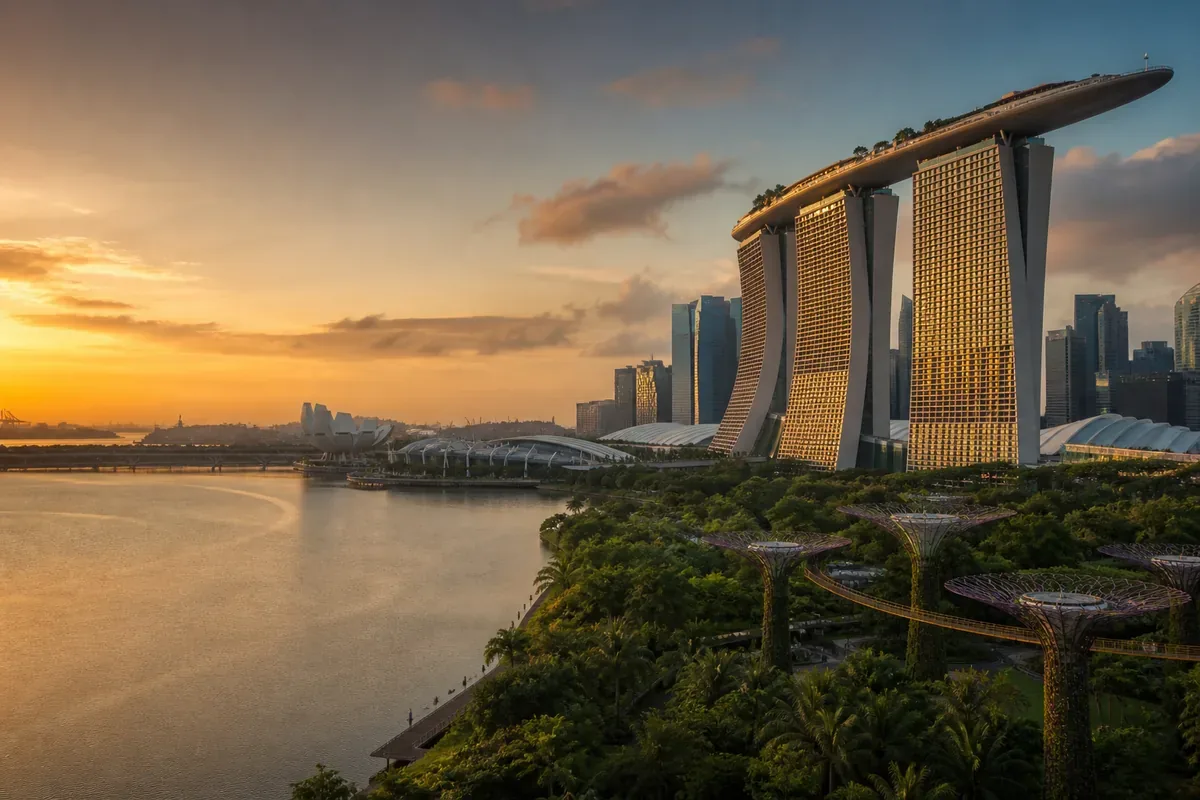
Visual illustration — scenes do not document the current conditions of the place.
Factual references
Singapore in practice
These benchmarks are used to identify the destination, read a motto and prepare contacts. They do not describe the entry conditions or the current security.
- Capital / institutional headquarters
- Singapore
- Currency: code to be identified
- SGD · dollar de Singapour
- Telephone code
- +65
- Geographical code
- SG
The borders listed below correspond to the neighbours in the Azatour catalogue; they do not constitute an exhaustive list of all neighbouring countries.
Codes and monetary names: SIX, maintenance agency ISO 4217. Comparison of the benchmark made on October 6, 2026; the conditions of payment are verified with the provider.
Source: GeoNames, CountryInfo, import of , CC BY 4.0 license. The specific institutional seats are specified; no demographic data or exchange rates are included.
A step to understand and organize
Botanical gardens: distinguishing walks and collections
Singapore's botanical gardens combine tropical landscape, research and conservation. Their interest goes beyond that of a green space.
Source of the benchmark: UNESCO World Heritage Record. UNESCO DataHub Reference . This source documents the subject; access, tickets and transport must be confirmed separately.
The decision that changes this stage
Compare a general walk with a visit centered on specific collections. Ask for the accessible areas, specific entries and the route that suits your interests. Keep this separate exit from another set of urban gardens with a different name in your program.
Three points to confirm before booking
- Garden and areas specifically identified
- Special collections or entries
- Walking time and breaks
Why go?
Experiences to be missed
Use these markers to compose a program adapted to your pace. Travel times, season and accommodation location count as much as the number of places visited.
Marina Bay and the gardens
The seafront, architecture and green spaces combine easily, with visits to be placed in less warm hours.
Historical districts
Chinatown, Little India and Kampong Glam are discovered on foot and by metro, respecting places of worship and local life.
Kitchen and museums
Hawker centers, markets and cultural institutions give a depth to the stay beyond urban views.
Route idea
A route to be adapted, not to be followed
This frame helps to visualize the pace of the journey. Keep margin for transfers, weather and unexpected discoveries.
- Day 1
Marina Bay
Take your cues around the bay and keep the gardens or panoramas for the end of the day.
- Days 2–3
Districts and kitchen
Group the walks by area and schedule an indoor break at the warmest hours.
- Days 4–5
Nature or museums
Add a reserve, an island, a museum or simply more time to your favorite neighborhoods.
When to leave
Choose the right time
There is not a single ideal season: the best time depends on the areas visited, your activities and your tolerance to the influx or weather variations.
Year-round
Heat and humidity remain present; showers and thunderstorms can occur quickly.
Event periods
Trade fairs, competitions and parties can greatly increase hotel rates and crowds.
Daily rhythm
Prefer walks early or evening and keep activities covered for heavy rain.
Before booking
Checks that avoid bad surprises
- Choose accommodation close to the metro and compare the travel time from the airport with the arrival time.
- Check local rules, including for regulated products, medicines and behaviours in the public space.
- Provide light clothing, rain protection and a layer for heavily air-conditioned interiors.
- For a stopover, check the entry formalities, baggage storage and the required margin before the next flight.
The formalities and recommendations may change. Check them before departure and check local information to prepare visits.
Travel Reports — France DiplomacyFrequently Asked Questions
Singapore: Questions Before Departure · Global Voices
How many days do you spend in Singapore?
Three days is enough for a first discovery. Four to five days offer a more enjoyable rhythm and time for nature or museums.
Which neighborhood to choose?
Marina Bay is spectacular, Chinatown central and Little India lively. The proximity of a useful metro line often counts more than the neighbourhood itself.
Is Singapore suitable for a stopover?
Yes, if the connection leaves a comfortable margin for immigration, transportation and return to the airport.
How do I get around?
The metro and buses cover the city effectively. The walk complements the transports well, adapting the rhythm to heat and showers.