
Western Europe
Travel to Luxembourg: city, valleys and castles
Compact and well-served, Luxembourg combines urban heritage, wooded trails, vineyards and castles. It is particularly suitable for a short stay without a car.
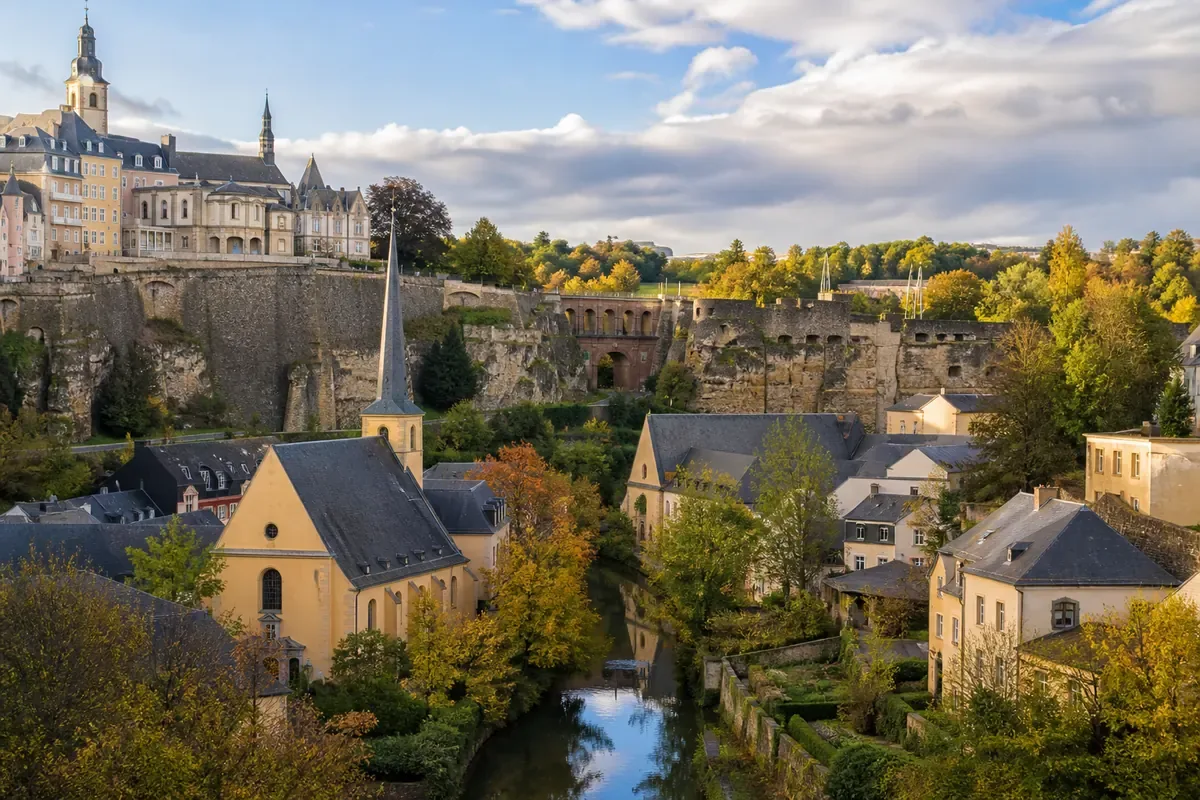
Visual illustration — scenes do not document the current conditions of the place.
Factual references
Luxembourg in practice
These benchmarks are used to identify the destination, read a motto and prepare contacts. They do not describe the entry conditions or the current security.
- Capital / institutional headquarters
- Luxembourg
- Currency: code to be identified
- EUR · euro
- Telephone code
- +352
- Geographical code
- LU
The borders listed below correspond to the neighbours in the Azatour catalogue; they do not constitute an exhaustive list of all neighbouring countries.
Codes and monetary names: SIX, maintenance agency ISO 4217. Comparison of the benchmark made on October 6, 2026; the conditions of payment are verified with the provider.
Source: GeoNames, CountryInfo, import of , CC BY 4.0 license. The specific institutional seats are specified; no demographic data or exchange rates are included.
Destinations with a common land border
To consider a circuit, check separately the opening of borders, permits and transport. A common border does not guarantee an accessible crossing.
A step to understand and organize
Luxembourg: connecting old neighborhoods and fortifications
The old districts and fortifications of Luxembourg make the old defensive importance of the city legible. The remains are part of a multi-level urban landscape.
Source of the benchmark: UNESCO World Heritage Record. UNESCO DataHub Reference . This source documents the subject; access, tickets and transport must be confirmed separately.
The decision that changes this stage
Compare an outdoor walk with a visit including a fortification space. Make clear the entry and constraints of the inner journey. Organize level changes and journeys to the station before booking several times.
Three points to confirm before booking
- Space of fortifications actually visited
- Levelling and interior access
- Travel to next link
Why go?
Experiences to be missed
Use these markers to compose a program adapted to your pace. Travel times, season and accommodation location count as much as the number of places visited.
Luxembourg City
Fortifications, low neighbourhoods and European institutions form a dense but accessible walkway.
Mullerthal
Trails, rocks and forests make up a nature excursion to adapt to the weather.
Moselle and Ardennes
Vineyards, castles and small towns give two different directions to extend the stay.
Route idea
A route to be adapted, not to be followed
This frame helps to visualize the pace of the journey. Keep margin for transfers, weather and unexpected discoveries.
- Day 1
High town and fortifications
Link lookout, museums and historic neighborhoods.
- Day 2
Grund and institutions
Explore the urban valleys and a contemporary neighbourhood.
- Days 3–4
Mullerthal or Moselle
Choose nature or vineyards depending on the season.
When to leave
Choose the right time
There is not a single ideal season: the best time depends on the areas visited, your activities and your tolerance to the influx or weather variations.
Spring
Forests and valleys are re-entering colors, with variable weather.
Summer
Long days to walk and explore several regions.
Autumn and winter
Vineyards, museums and markets are a more urban holiday.
Before booking
Checks that avoid bad surprises
- Use public transport to connect city and regions.
- Plan shoes adapted to valleys and trails.
- Check the opening days of small museums and castles.
- Book early at European meetings and major events.
The formalities and recommendations may change. Check them before departure and check local information to prepare visits.
Travel Reports — France DiplomacyFrequently Asked Questions
Luxembourg: questions before departure
How many days do you expect?
Two days are enough for the capital; four days allow a natural region.
Do you need a car?
Not for a first stay, thanks to public transport and national connections.
Where to hike?
Mullerthal is the most famous region, with routes of varying lengths.
Can we come by train?
Yes, several regional connections serve the capital; compare the length of time door to door.