
South Asia · Himalayas
Travel to Bhutan: valleys, monasteries and itinerary
Bhutan is slowly discovered between valleys, passes and monasteries. The winding roads, altitude and the arrangements for the organisation of the stay require a short, supervised and checked journey before booking.
Visual illustration — scenes do not document the current conditions of the place.
Factual references
Bhutan in practice
These benchmarks are used to identify the destination, read a motto and prepare contacts. They do not describe the entry conditions or the current security.
- Capital / institutional headquarters
- Thimhou
- Currency: code to be identified
- BTN · Ngultrum
- Telephone code
- +975
- Geographical code
- BT
The borders listed below correspond to the neighbours in the Azatour catalogue; they do not constitute an exhaustive list of all neighbouring countries.
Codes and monetary names: SIX, maintenance agency ISO 4217. Comparison of the benchmark made on October 6, 2026; the conditions of payment are verified with the provider.
Source: GeoNames, CountryInfo, import of , CC BY 4.0 license. The specific institutional seats are specified; no demographic data or exchange rates are included.
Destinations with a common land border
To consider a circuit, check separately the opening of borders, permits and transport. A common border does not guarantee an accessible crossing.
A step to understand and organize
Punakha Dzong: organize the stage around a religious place
The Punakha dzong is located at the confluence of Pho Chhu and Mo Chhu. It combines administrative and religious functions in the history of the district.
Source of the benchmark: Punakha District Administration. Source consulted . This source documents the subject; access, tickets and transport must be confirmed separately.
The decision that changes this stage
Compare a visit to the dzong with a day adding other places in the valley. Ask for accessible spaces, outfit, accompaniment and travel. Keep the time to explain the journey between bases separately, and have the entire route confirmed by the person who is planning your stay.
Three points to confirm before booking
- Dzong spaces open to visitors
- Appropriate support and support
- Travel between the bases of the stay
Why go?
Experiences to be missed
Use these markers to compose a program adapted to your pace. Travel times, season and accommodation location count as much as the number of places visited.
Paro
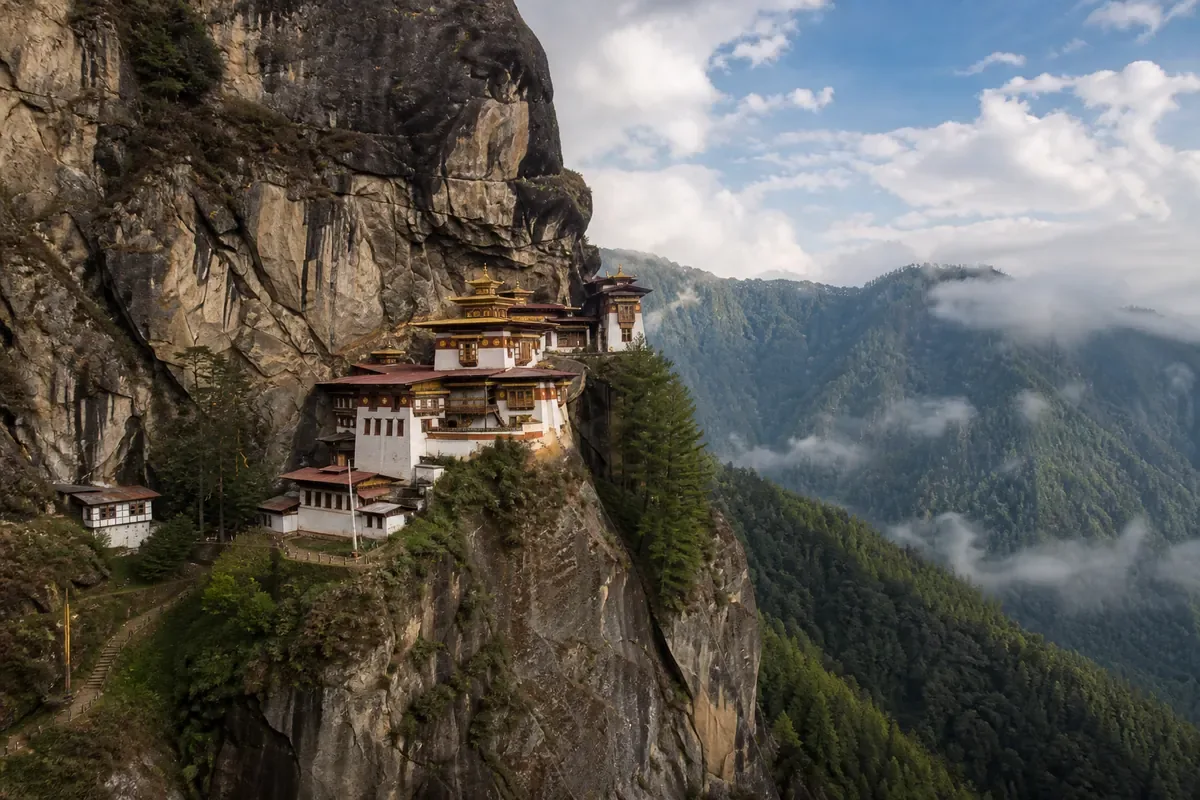
The valley of arrival leads to the monastery of Taktsang.
Thimpu
The capital lights up the contemporary life of the kingdom.
Punakha
Dzong, rivers and lower valley enrich the course.
Route idea
A route to be adapted, not to be followed
This frame helps to visualize the pace of the journey. Keep margin for transfers, weather and unexpected discoveries.
- Days 1–3
Paro and Thimpu
Step up in rhythm.
- Days 4–6
Punakha
Cross the pass with a weather margin.
- Days 7–9
Back to Paro
Keep the major hike at the end of the stay.
When to leave
Choose the right time
There is not a single ideal season: the best time depends on the areas visited, your activities and your tolerance to the influx or weather variations.
Spring
Variable flowers and conditions at altitude.
Autumn
Visibility sought and high demand.
Winter and monsoon
Cold or rain influence roads and hikes.
Before booking
Checks that avoid bad surprises
- Check the official travel arrangements.
- Step up to the altitude.
- Compare circuit, guide and services.
- Respect the rules of monasteries and festivals.
The formalities and recommendations may change. Check them before departure and check local information to prepare visits.
Travel Reports — France DiplomacyFrequently Asked Questions
Bhutan: Questions Before Departure · Global Voices
Can we travel independently?
The modalities are changing: confirm the organisation required with the authorities and operators approved.
How many days?
Eight to twelve days allow several valleys with a realistic rhythm.
Which hike to choose?
Taktsang is emblematic; adapt the effort to altitude and weather.
When to leave?
Spring and autumn are sought after, according to festivals and visibility.
Pursue as you please
Travel ideas around Bhutan
These files compare several destinations according to the type of stay. They help to put this guide back in a wider choice.