
Step 1
Evaluate the real trip
Countries, regions, season, altitude, isolation, duration and activities do not expose to the same constraints. Describe your itinerary precisely to a health professional when your situation or trip warrants it. The general recommendations do not replace an individual opinion.
Step 2
Anticipate health approaches
Check health recommendations, vaccinations and any required documents early enough. Time limits may vary. Use health authorities, official travel advice and a competent centre for your situation as a priority.
Step 3
Preparation of treatments and prescriptions
Store the medicinal products in their original packaging with a prescription that indicates the name of the substances if possible. Control the applicable transport and entry rules, as well as the storage in case of heat or cold. Keep the essentials accessible during the journey.
Step 4
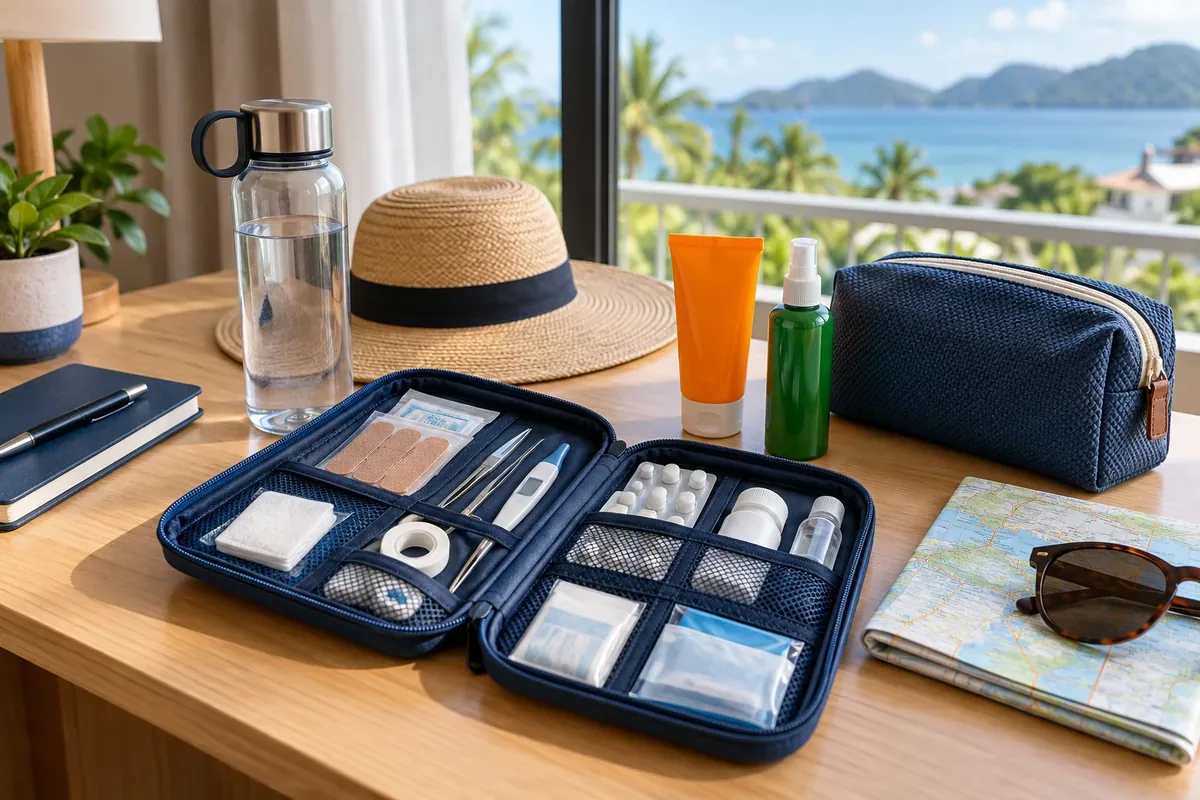
Compose a useful kit
Adapt it to your needs, duration, activities and access to care. Avoid accumulating products that you don't know how to use. Ask a doctor or pharmacist for advice, including in cases of allergy, regular treatment or isolated travel.
Step 5
Reduce risks on a daily basis
Identify areas and schedules that require more vigilance, protect your essential effects and avoid unnecessary disclosure of your documents or means of payment. On site, follow regulations, local instructions and official alerts.
Step 6
Know who to contact
Note the local emergency numbers, your assistance, a close friend and the relevant consular contact information. Keep this information offline. In case of an incident, first, focus on local relief; the consulate can inform and guide, but does not replace insurance or emergency services.
Step 7
Putting into practice: A program that changes region
Reconsult the official information for the new region and ask for a suitable medical opinion if necessary. Check transport, accommodation and assistance before keeping the initial program.
Putting comparison into practice
Prepare the information to be transmitted to the relevant interlocutors
This grid helps to present a project to a health professional or read the official recommendations. It does not determine treatment, vaccination or level of safety.
Educational example of preparation, without commercial offer or testimony. Adapt the situations to your journey and to the answers of the competent interlocutors.
On a small screen, scroll the table horizontally to read the three columns. On the keyboard, use the arrows after selecting the array.
| Situation to be considered | What it involves | Information to be obtained |
|---|---|---|
| Route | Countries, regions, transits, dates and duration are available. | Provide the actual course, including the proposed extensions. |
| Conditions of stay | Accommodation, activities and access to services are described. | Report specific situations to the professional concerned without generalizing a response to the group. |
| Organization of contacts | Useful documents and contact persons are accessible to the traveller. | Keep official channels, support information and offline copying. |
How to use answers
Prepare questions early enough to resolve the necessary issues with the appropriate interlocutors. A board received for another trip or person does not automatically validate the other trip.
Take the time of a last check
Before you validate, read the names, dates, locations, schedules and details of the services included. Do this check calmly on the final summary. An error identified before payment is usually much simpler to correct than after confirmation.
Always review the final conditions displayed by the claimant before paying and keep a copy of the summary. They only describe the reserved offer, the options for modification and the responsibilities of each party.
To be checked before departure
Official sources
These pages allow to update information that can evolve. Consult with the authorities of your destination and the bodies competent for your situation.
Frequently Asked Questions
The answers before deciding
When to prepare for a journey?
Once the route becomes credible, especially if vaccination, regular treatment or a particular activity is involved. Ask for a schedule adapted to a health professional.
What can I put in a travel kit?
The content depends on the traveller, the destination and the activities. Get out of your usual treatments and needs, then ask a professional for advice to complete without overloading.
How to travel with regular treatment?
Anticipate quantity, time lag, storage and proofs. Check also the rules of destination and transit countries, especially for controlled products.
Where to check security alerts?
For a French traveller, check out France Diplomatie country cards and official alerts. The information must be rechecked shortly before departure and during the stay.