
East Asia
South Korea: Seoul, Busan and Directions
South Korea is easy to travel when it limits the bases: Seoul, Busan and a natural or historical getaway already offer a rich journey, carried by an efficient transport network.
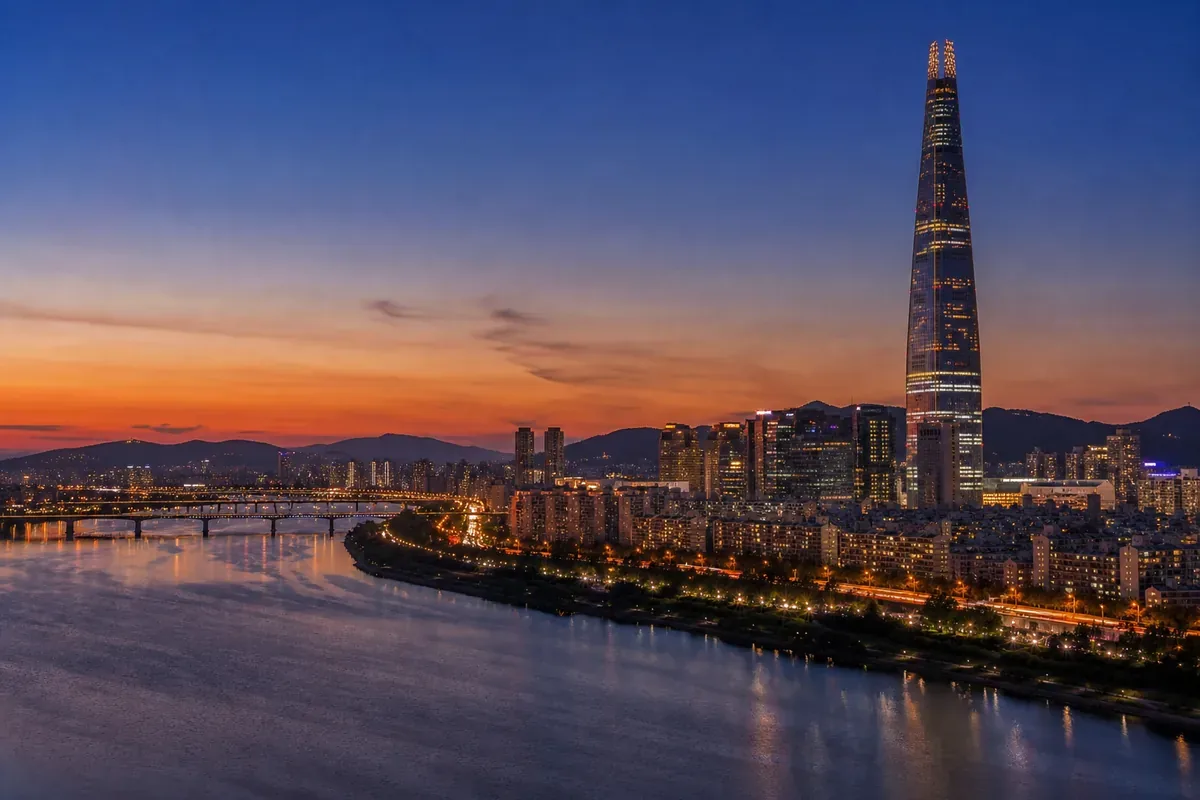
Visual illustration — scenes do not document the current conditions of the place.
Factual references
South Korea in practice
These benchmarks are used to identify the destination, read a motto and prepare contacts. They do not describe the entry conditions or the current security.
- Capital / institutional headquarters
- Seoul
- Currency: code to be identified
- KRW · won sud-coréen
- Telephone code
- +82
- Geographical code
- KR
The borders listed below correspond to the neighbours in the Azatour catalogue; they do not constitute an exhaustive list of all neighbouring countries.
Codes and monetary names: SIX, maintenance agency ISO 4217. Comparison of the benchmark made on October 6, 2026; the conditions of payment are verified with the provider.
Source: GeoNames, CountryInfo, import of , CC BY 4.0 license. The specific institutional seats are specified; no demographic data or exchange rates are included.
A step to understand and organize
Gyeongju: Distribution of Heritage Areas
The historic areas of Gyeongju conserve sculptures, pagodas and remains of temples and palaces linked to Korean Buddhist art.
Source of the benchmark: UNESCO World Heritage Record. UNESCO DataHub Reference . This source documents the subject; access, tickets and transport must be confirmed separately.
The decision that changes this stage
Choose the areas that are relevant to your interest and ask for their exact position. Compare a day of discovery with several exits from the same base. The word "Gyeongju" in a circuit is not enough to know the walking and transfers between the areas.
Three points to confirm before booking
- Areas and monuments actually retained
- Movements between sectors
- Base for distributing outputs
Why go?
Experiences to be missed
Use these markers to compose a program adapted to your pace. Travel times, season and accommodation location count as much as the number of places visited.
Seoul by neighbourhoods
Palaces, markets, creative neighbourhoods and urban mountains are better discovered by grouping visits by sector.
Busan and the sea
The second city offers beaches, markets and hills. The train allows easy connection to Seoul.
Temples and parks
A city trip allows you to discover another face of the country, to choose according to the season and the time available.
Route idea
A route to be adapted, not to be followed
This frame helps to visualize the pace of the journey. Keep margin for transfers, weather and unexpected discoveries.
- Days 1–4
Seoul as a base
Divide visits by neighborhoods and keep a freer day after arrival.
- Days 5–7
Busan by train
Set up several nights to enjoy the coast and markets without running between the sites.
- Days 8–10
A targeted excursion
Add Gyeongju, a park or more time in a city than a succession of transfers.
When to leave
Choose the right time
There is not a single ideal season: the best time depends on the areas visited, your activities and your tolerance to the influx or weather variations.
Spring
Period appreciated for temperatures and blooms, with a high demand around some weekends.
Autumn
Often pleasant for walking and colors, but conditions vary with altitude.
Summer and winter
Heat wet or dry cold requires equipment and a rhythm adapted to the activities envisaged.
Before booking
Checks that avoid bad surprises
- Use an offline card and check transport apps that are compatible with your needs before departure.
- Choose accommodation close to a useful station rather than just a central location on a map.
- Compare the baggage conditions, connections and transfer from the airport for the first day.
- Check the entry formalities and official recommendations for your situation just before leaving.
The formalities and recommendations may change. Check them before departure and check local information to prepare visits.
Travel Reports — France DiplomacyFrequently Asked Questions
South Korea: Questions Before Departure
How many days do you plan in South Korea?
A week will allow you to discover Seoul and Busan. Ten to twelve days give time to add a historic or natural step.
Should we rent a car?
No for a first Seoul–Busan route: trains and urban transport are usually simpler.
Which season to choose?
Spring and autumn are often sought after, but summer and winter can be suitable with a suitable program.
Can we easily visit from Seoul?
Yes, several excursions are possible. However, avoid filling every day: the city deserves several full days.
Pursue as you please
Travel ideas around South Korea
These files compare several destinations according to the type of stay. They help to put this guide back in a wider choice.