
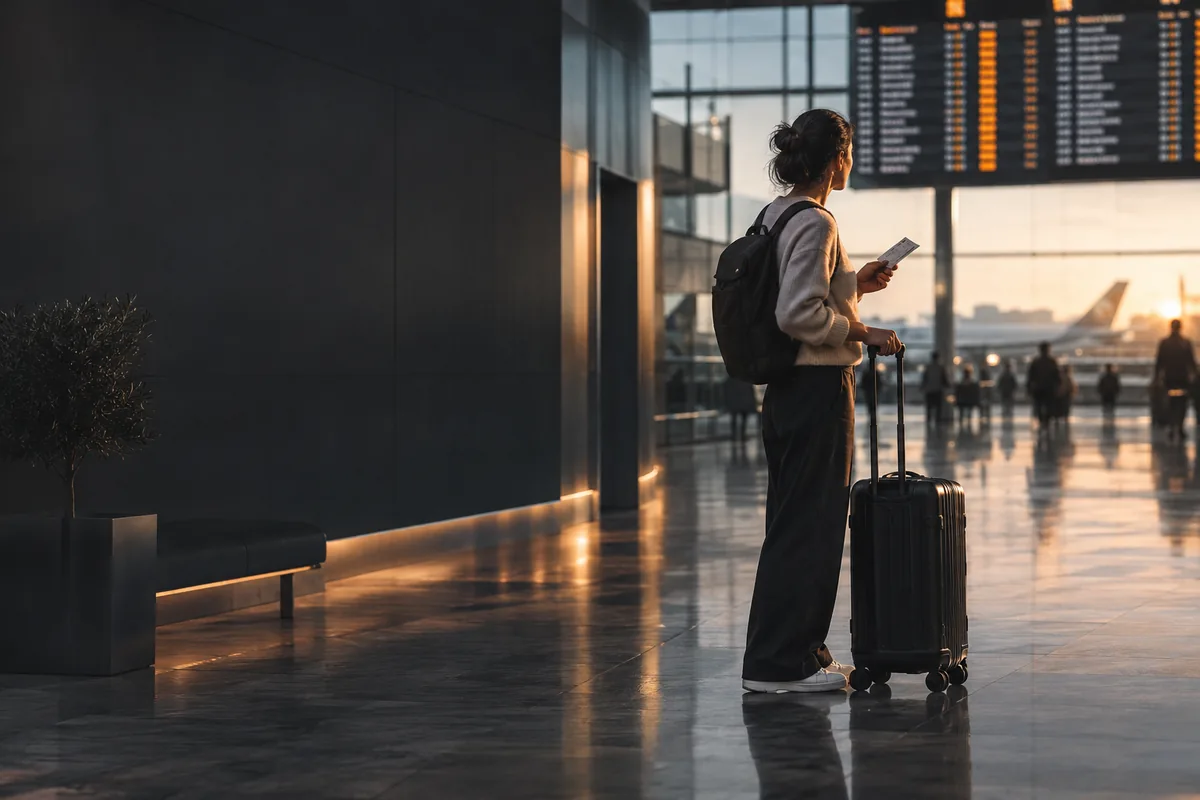
Photographic illustration generated by IA, designed for this folder. Origin of visuals.
Step 1
Distinguish route and contract
Grouping two flights in a screenshot does not turn them into a single ticket. Take the references and ask the seller how the correspondence is organized. With separate contracts, an incident on the first route can affect a service that the second seller considers independent.
Step 2
Counting the actual sequences
Include disembarkation, walking, baggage recovery, border control, transfer and re-registration if necessary. The duration of the flight is not fully available: the time limits for baggage storage and boarding are set before the scheduled departure.
Step 3
Adapt margin to the course
Time depends on the airport, the route, mobility and rules. Check the carrier and airport information for your exact route. A short stop on a ticket may not be suitable for a family with additional constraints.
Step 4
Prepare the delay scenario
Keep contacts and confirmations of the following services. If a night becomes necessary, notify accommodation and renter. Ask for options before paying a new trip and document the incident to then check the applicable fees. Keep tickets and contacts accessible offline.
Step 5
Putting into practice: Two tickets that seem to follow
List the actual contracts and sequences from the deplaning to the next boarding. Ask for baggage handling and liability in case of incident; add a night solution if the journey requires it.
Putting comparison into practice
Trace seat connection to next door
For a match, look at the complete chain rather than the only difference between two schedules. Each task must be confirmed for the tickets and terminals actually retained.
Educational example of preparation, without commercial offer or testimony. Adapt the situations to your journey and to the answers of the competent interlocutors.
On a small screen, scroll the table horizontally to read the three columns. On the keyboard, use the arrows after selecting the array.
| Situation to be considered | What it involves | Information to be obtained |
|---|---|---|
| Exit of first flight | The landing point and any checks shall be identified. | Ask for the path applicable to the journey, without assuming you remain in the transit area. |
| Baggage and movement | The suitcase may require a recovery or a new check-in. | Confirm the transport, next terminal, transport between buildings and necessary documents. |
| Access to second flight | The carrier limits concern several steps before take-off. | Increase check-in and boarding times and then provide for a margin on the route. |
How to use answers
The margin is built from these tasks and the consequences of a delay. With separate tickets, ask for the contractual solutions available; this grid does not guarantee any support.
Take the time of a last check
Before you validate, read the names, dates, locations, schedules and details of the services included. Do this check calmly on the final summary. An error identified before payment is usually much simpler to correct than after confirmation.
Always review the final conditions displayed by the claimant before paying and keep a copy of the summary. They only describe the reserved offer, the options for modification and the responsibilities of each party.
To be checked before departure
Official sources
These pages allow to update information that can evolve. Consult with the authorities of your destination and the bodies competent for your situation.
Frequently Asked Questions
The answers before deciding
Do we always have to get his suitcase back?
Depends on the course and the contracts. Confirm the destination on the label and the transit requirements with the carrier.
Can a change of airport require an entry document?
Yes, leaving the airport may involve a border crossing. Check with the authorities to verify your citizenship requirements.